L’UE fera-t-elle enfin payer les déchets pour leur empreinte carbone croissante ?
30 mai 2026
Janek Vahk est un expert en économie circulaire et en durabilité, œuvrant à accélérer la transition de l’Europe vers une société zéro déchet. Il est le responsable des politiques zéro pollution chez Zero Waste Europe.
D’ici la fin juillet, la Commission européenne doit déterminer s’il faut inclure l’incinération des déchets municipaux dans le Système d’échange de quotas d’émissions (EU ETS). Cela peut sembler technique, mais cette décision mettra à l’épreuve la crédibilité du leadership climatique de l’Europe.
À une époque où les marchés du carbone se développent dans le monde et où les gouvernements subissent des pressions pour fermer les échappatoires, l’incinération des déchets est devenue un angle mort croissant dans la politique climatique européenne.
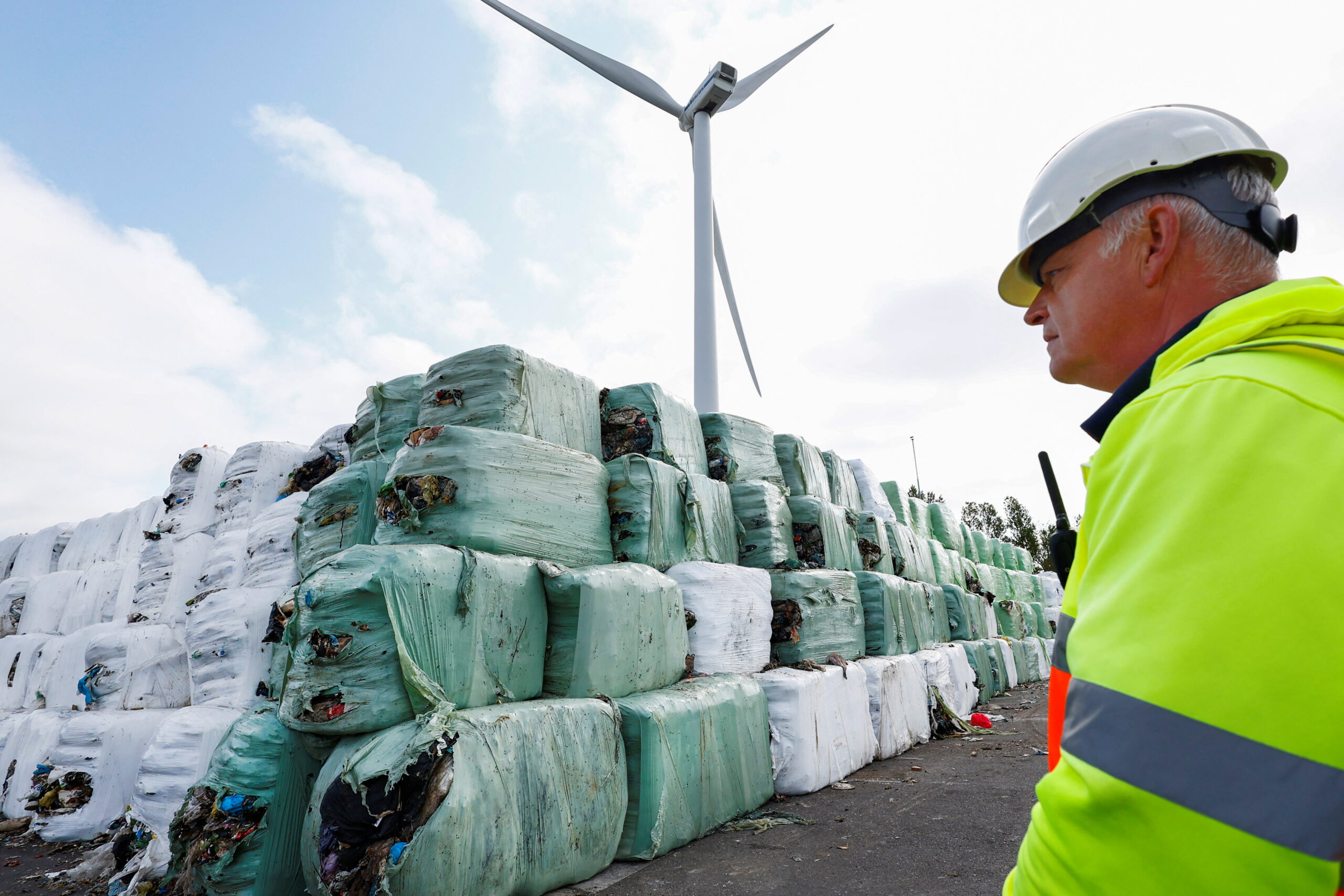
Depuis 1990, les émissions du secteur ont à peu près doublé. Aujourd’hui, les incinérateurs de déchets déchargent des dizaines de millions de tonnes métriques de dioxyde de carbone chaque année, en grande partie en raison des plastiques issus de combustibles fossiles. Or, contrairement aux centrales électriques, aux fours de cimenterie ou aux aciéries, les incinérateurs ne paient pas pour ces émissions dans le cadre du système phare de tarification du carbone de l’UE.
Si l’Europe veut réellement atteindre la neutralité climatique d’ici 2050, cette anomalie doit être résolue.
Already have an account?
Log in here →
Continue reading with free access
Our goal is simple: to help you make sense of the policy decisions shaping the planet and what they mean for all of us.
Register here →
It takes less than a minute.
Log in to your account
Forgot your password?
Janek Vahk est un expert en économie circulaire et en durabilité, œuvrant à accélérer la transition de l’Europe vers une société zéro déchet. Il est le responsable des politiques zéro pollution chez Zero Waste Europe.
By the end of July, the European Commission must decide whether to include municipal waste incineration in the EU Emissions Trading System. It may sound technical, but the decision will test the credibility of Europe’s climate leadership.
At a time when carbon markets are expanding worldwide and governments are under pressure to close loopholes, refuse incineration has become a growing blind spot in European climate policy.
Since 1990, emissions from the sector have roughly doubled. Today, garbage incinerators release tens of millions of metric tons of carbon dioxide each year, much of it from fossil fuel-based plastics. Yet unlike power plants, cement kilns or steel mills, incinerators do not pay for those emissions under the EU’s flagship carbon-pricing system.
If Europe is serious about reaching climate neutrality by 2050, this anomaly must be tackled.
Across several member states, waste-to-energy capacity is still expanding. These plants are built to operate for 30 to 40 years. At the same time, Europe has committed to reducing waste, increasing recycling and building a circular economy. The contradiction is obvious.
Incinerators require a steady stream of residual waste to remain financially viable. That creates structural tension with prevention and recycling targets. When infrastructure depends on waste, waste becomes something to secure rather than to reduce.
Excluding incineration from carbon pricing deepens that distortion. It makes burning comparatively cheaper than recycling, despite the climate cost of combusting fossil-based materials.
Including the sector in the EU Emissions Trading System (EU ETS) would restore a basic principle: the polluter pays.
Policy patchwork
Europe would not be starting from scratch. The Netherlands and Norway already apply national carbon levies to waste incineration. Denmark and Sweden price most waste-to-energy emissions under the EU system, while Germany covers the sector through its national emissions trading scheme.
Britain has announced it will bring municipal waste incineration into its ETS from 2028.
These examples demonstrate that pricing emissions from waste is both feasible and politically workable. But fragmented national approaches risk distorting the single market and encouraging cross-border waste shipments driven by regulatory differences rather than environmental logic.
An EU-wide approach would create consistency and provide long-term certainty for investors.
Regulatory blind spot
Carbon pricing has already reshaped Europe’s power sector. As allowance prices rose, coal declined rapidly and investment shifted toward renewables. Industry is now responding to stronger carbon signals with electrification and efficiency measures.
Applying that logic to waste would change behaviour across the value chain. It would incentivise better sorting, more plastic recycling and upstream waste prevention. It would strengthen the economics of reuse and circular business models that cut emissions before waste even exists.
Without a carbon price, incineration remains a regulatory blind spot. With one, climate and resource policy finally align.
The timing matters beyond Europe. Carbon markets are spreading, from China’s national ETS to emerging schemes in other major economies. If the EU leaves a fast-growing emissions source outside its own system, it weakens its position as a standard setter in global carbon governance.
Roadmap launched to restart deadlocked UN plastics treaty talks
At the same time, landfills are facing stricter methane controls under updated EU rules. Tightening methane standards while leaving incineration outside the carbon price risks shifting emissions rather than reducing them.
This is not simply about waste management. It is about consistency in climate policy.
Europe has expanded its carbon market to maritime transport and introduced a carbon border adjustment mechanism. Leaving municipal waste incineration untouched would sit uneasily with that ambition.
By July, the Commission has a clear choice to make. Close the loophole and confirm that every significant source of fossil carbon must contribute to decarbonisation. Or explain why burning fossil-based waste should remain the exception in Europe’s climate rulebook.
If carbon markets are meant to drive systemic change, they cannot stop at the incinerator gate.
Françoise Perrin
Rédactrice française engagée dans l’information citoyenne, je m’intéresse aux liens entre écologie, démocratie et solidarité. À travers mes articles, je cherche à rendre les grands enjeux de société plus clairs, plus accessibles et plus proches du terrain, en donnant une place aux initiatives, aux débats et aux voix qui participent à transformer notre époque.